
Batangas Local Gov’t Unit Bolsters Department of Health’s HPV Vaccination Program
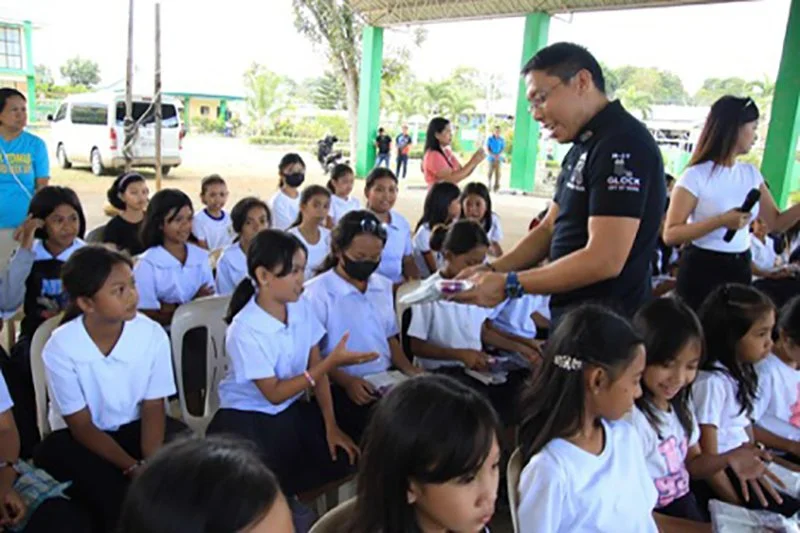
Sto. Tomas City Mayor Arth Jhun A. Marasigan leads the city’s localized Cervical Cancer Elimination (CCE) Plan under the program SHEmpre Ligtas–Student Health Education, implemented by the Health Education and Promotion Unit (HEPU) of Sto. Tomas.
Despite long delays in the delivery of HPV vaccine supplies from the DOH, leading LGUs like Sto. Tomas City have stepped up by allocating local funds to procure 4-valent HPV vaccines to ensure the continuity of the DOH’s national HPV immunization program.
Cervical cancer is the second most common cancer among Filipino women, yet it is largely preventable through HPV vaccination and screening, and highly manageable with timely treatment.
Sto. Tomas: A Model for Local Action
In 2024, Sto. Tomas completed the catch-up vaccination of around 1,800 14-year-old schoolgirls from both public and private schools who missed their dose of the 4-valent HPV vaccine initiated by the DOH. This was carried out as part of its localized Cervical Cancer Elimination (CCE) Plan under the program SHEmpre Ligtas – Student Health Education, implemented by the Health Education and Promotion Unit (HEPU) of Sto. Tomas.
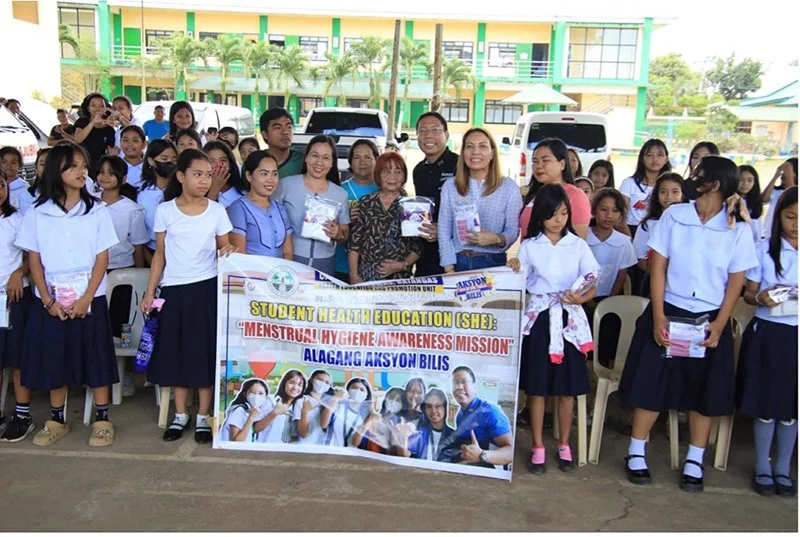
Through the SHEmpre Ligtas – Student Health Education (SHE) program, Sto. Tomas, Batangas empowers young girls with knowledge as part of its localized Cervical Cancer Elimination Plan.
With this milestone achieved, the city has now moved into the next phase, targeting the vaccination of another batch of around 1,800 schoolgirls with the 4-valent HPV vaccine. This plan runs until 2030, ensuring protection for every adolescent girl in Sto. Tomas.
Mayor Marasigan emphasized that the initiative complements the DOH’s current program, which covers public schoolgirls aged 9 to 14 years old.
“Cervical cancer elimination is a shared responsibility. While the Department of Health leads through the National Immunization Program, LGUs like Sto. Tomas must do our part to ensure no girl is left behind. By investing in HPV vaccination, we are securing the future of our daughters and our community,” he said.
“Our commitment is long-term. We will continue vaccinating adolescent girls until 2030. This is not just a health program; it is a legacy we want to leave for future generations—a city free from cervical cancer.”
National Momentum for HPV Immunization
The health program of Sto. Tomas aligns closely with the State of the Nation Address of President Ferdinand Marcos Jr., which highlighted HPV vaccination as a government priority and noted the allocation of dedicated funds to protect Filipinos from HPV-related cancers. The DOH’s 2025 budget includes increased funding for HPV vaccines, signaling progress in addressing preventable cancers.
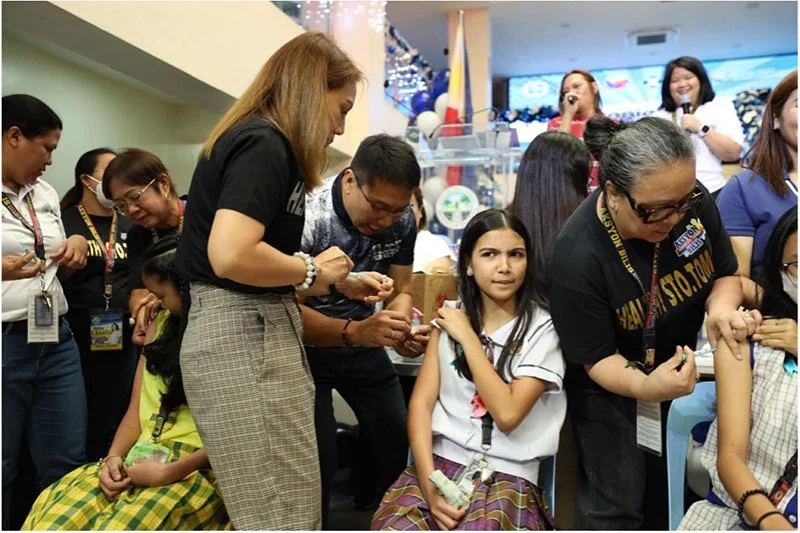
As part of the SHEmpre Ligtas – Student Health Education (SHE) program, Sto. Tomas, Batangas brings HPV vaccination closer to students— a vital step in the city’s Cervical Cancer Elimination Plan.
Still, the country’s coverage remains below the WHO’s 90% target, with many girls over 15 left outside the DOH’s designated group. This reality underscores the importance of LGU complementation.
“We welcome the renewed prioritization of HPV vaccination at the national level. But even with these investments, local governments must continue bridging critical gaps. I call on my fellow mayors and governors: let us step up together. With national and local governments working hand in hand, we can meet the WHO 90-70-90 goals for the Philippines. We also hope that the DOH central office will increase its assistance to us as an LGU, especially given this health priority of ours,” Mayor Marasigan added.
The WHO strategy calls for 90% of girls to be fully vaccinated with the HPV vaccine by age 15, 70% of women to be screened at least twice in their lifetime, and 90% of women with pre-cancer or cancer to receive treatment.
Cervical cancer is the second most common cancer among Filipino women, yet it is largely preventable through HPV vaccination and screening, and highly manageable with timely treatment.
Sto. Tomas’ experience shows how LGU-led investments can sustain momentum toward cervical cancer elimination despite challenges. With DOH leadership, increased national funding, and stronger LGU initiatives, the Philippines can protect the next generation and move closer to eliminating cervical cancer by 2030.
This public service article was submitted by Cris Maniago of NGP Integrated Marketing Communications.



No comments: