
When the Youngest Manong Becomes the Elder
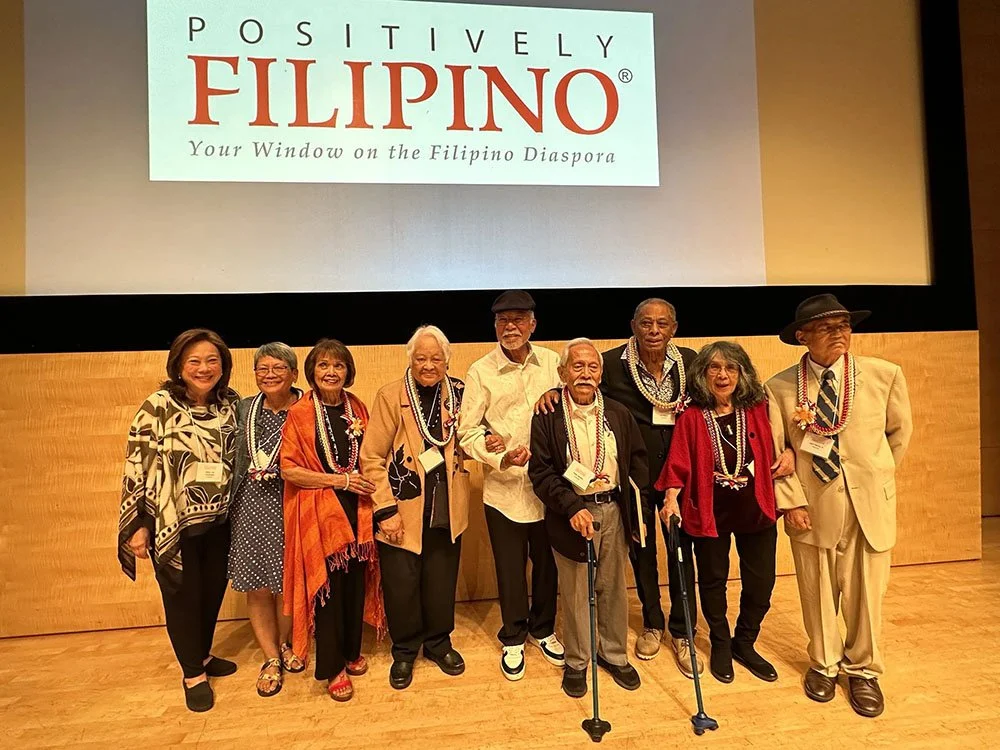
(L-R) Positively Filipino publisher Mona Lisa Yuchengco, Velma Veloria, Rozita Lee, Vangie Buell, emcee lloyd LaCuesta, Peter Jamero, Joe Bataan, Dorothy Cordova and Alex Fabros, Jr. (Photo by Minerva Amistoso)
Life has a way of changing that perspective.
When the third group of manongs and manangs is honored on August 8, I will be sitting in the audience as their names are called and their accomplishments are recognized. Yet this time, I will be older than many of the people standing on the stage. The youngest manong from the first group will have become, in the quiet arithmetic of time, one of the elders watching the next group receive its honor.
That realization carries both humor and meaning. Age arrives gradually. We do not always notice it while we are busy living, working, raising families, serving our country, building careers, and trying to contribute something of lasting value. Then one day we look around and discover that the people being honored as elders are younger than we are.
Two of the men in this third group are connected to important chapters in my own life. One was a childhood and high school friend. We knew each other before careers, ranks, titles, and accomplishments separated our paths. We knew each other when the future was still uncertain and when ambition was measured more by hope than by achievement.
Another I met as we began our military careers in armor. At that point, none of us could know where the road would lead. Military service has its own hierarchy of goals, tests, sacrifices, and expectations. Some men advance through command, responsibility, and rank. They earned their generals‘ stars. My own path eventually turned toward scholarship, history, teaching, and research, and I earned a Ph.D.
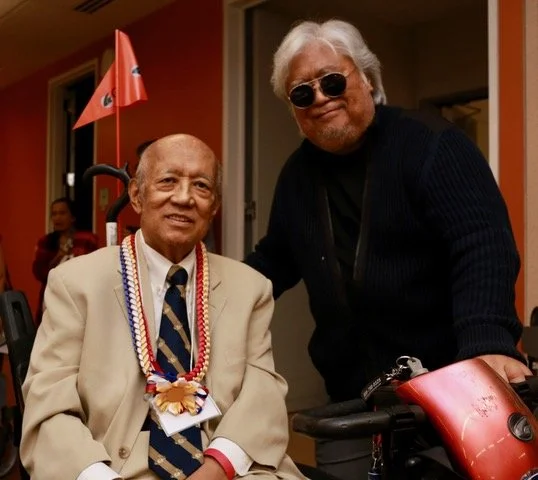
Fabros and Daniel Phil Gonzales (Photo by Minerva Amistoso)
Our careers did not develop as we may have imagined once. Life interrupted plans, redirected ambitions, and opened doors that we had not expected to enter. Some of us wore stars on our uniforms. Others earned academic degrees and spent their lives recovering histories that might otherwise have been forgotten. The paths were different, but the principle was the same: we continued forward.
Life has a way of altering our career goals. Very few people arrive exactly where they expected to be when they began. Circumstances intervene. Families need us. Wars change us. Institutions redirect us. Illness, opportunity, duty, and chance all play their parts. Yet success is not measured only by whether we reached the destination we first imagined. It is also measured by whether we adapted, persevered, and made something meaningful from the road we were given.
In the end, we succeeded.
The annual manong and manang honors created by Mona Lisa Yuchengco recognize that kind of success. She is a wonderful person whose commitment to Filipino and Filipino American history continues year after year. Through Positively Filipino and the annual honors, she brings attention to individuals whose contributions might otherwise remain known only within their families, professions, military units, universities, or local communities.
This work is important because Filipino American history has too often been overlooked, fragmented, or treated as a collection of isolated accomplishments. The manong and manang honors bring those lives together. They show that our history was built not by a single profession or generation, but by soldiers, educators, scientists, writers, physicians, public servants, community organizers, business leaders, and advocates.
These honorees did more than succeed personally. They contributed to the Filipino American presence in the United States. They opened institutions, entered professions from which Filipinos had once been excluded, served in the armed forces, built community organizations, preserved culture, and made the path wider for those who came after them.
Mona Lisa Yuchengco understands that honoring people is also a form of historical preservation. A name spoken publicly does not disappear as easily. A life recorded becomes part of the community’s memory. An achievement placed beside other achievements begins to reveal the larger history of a people.
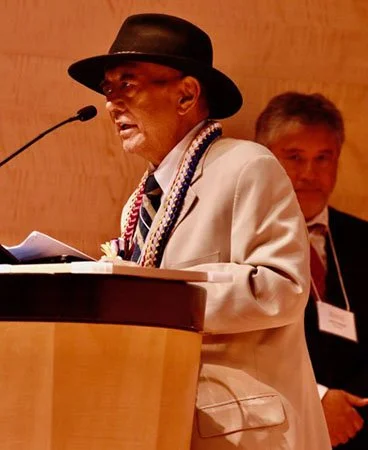
Fabros giving his acceptance speech (Photo by Minerva Amistoso)
As I sit in the audience on August 8, I will watch old friends and fellow veterans receive recognition they have earned. I will remember when we were young and when none of us could predict where our lives would lead. I will think about the generals who earned their stars and about the scholar who earned his doctorate. I will also think about the strange movement of time: how the youngest man on one stage becomes older than the honorees on the next.
There is no sadness in that realization. There is gratitude.
The youngest manong from the first group will have become, in the quiet arithmetic of time, one of the elders watching the next group receive its honor.
We lived long enough to see our work recognized. We lived long enough to see our friends honored. We lived long enough to understand that success takes many forms and that no two lives follow the same road. The stage changes. The audience changes. The names change. But the purpose remains: to honor those Filipinos and Filipino Americans who gave something of themselves to their country, their professions, their communities, and their history. Through the annual manong and manang honors, Mona Lisa Yuchengco ensures that these lives are not forgotten. She reminds us that our stories belong not only to us but also to those who will follow. And as one generation watches another take the stage, we see that history is not merely something behind us. It is still being made. Alex S. Fabros, Jr. is a retired Philippine American Military History professor. More articles from Alex Fabros, Jr.



No comments: