
The Analog Bag: Internet-Free Fun
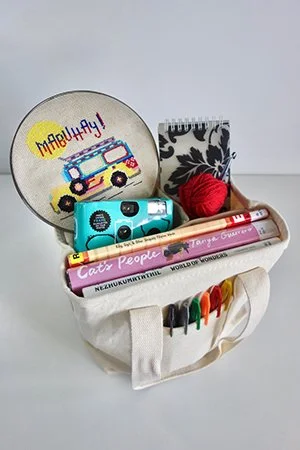
Enjoy offline living with this analog bag filled with books from the library and crafting materials found at home. (Photo by Claire Mercado-Obias)
It’s not the bag itself that’s sought after. We’re not talking about the latest designer purse or the $2.99 tote from the neighborhood grocery. Rather, it’s what’s inside that matters.
The purpose of an analog bag is to keep us from doom-scrolling on our phones by tempting us with digital-free activities like books, crossword puzzles, snail mail, drawing, coloring, photography, playing cards, and board games. Back in the day, before mobile devices and the internet, these were the things we did for fun. Before all of these were consolidated into a single device, they were tactile, required physical effort, and were often enjoyed with other people. Isn’t that what connection is about?
Research has shown that prolonged exposure to social media is linked to poor sleep, a sedentary lifestyle, shorter attention spans, and an increased risk of anxiety and depression. What’s more, being online makes us susceptible to buying things simply because an influencer says so. How many times have we clicked "add to cart" after watching someone’s shopping haul or unboxing video?
When putting together your analog bag, think about conscious consumption. Start with the bag itself—you probably already have several in your closet. Then go on a scavenger hunt around your home. Do you have books waiting to be read, puzzles waiting to be assembled, forgotten art materials, or blank notebooks ready to be filled?
Borrowing is another option. Maybe your dad still has his old digital camera and CD player, or your mom still has her sewing and crafting kits from decades ago. Swap books and games with friends. Explore vintage and secondhand finds from Buy Nothing groups or thrift shops. Try these hobbies before committing to them. And if you do need to buy something, why not support small entrepreneurs and Filipino-made products?
An analog bag can be any container, as long as it holds your screen-free selections. Think of it as a child's toy chest filled with options so enticing that you naturally reach for them instead of your phone. It should also be portable enough to accompany you during those moments when grabbing your phone feels automatic—while waiting in line, commuting, or simply killing time.
Here are a few ideas for what you can put inside.
A Bunch of Books
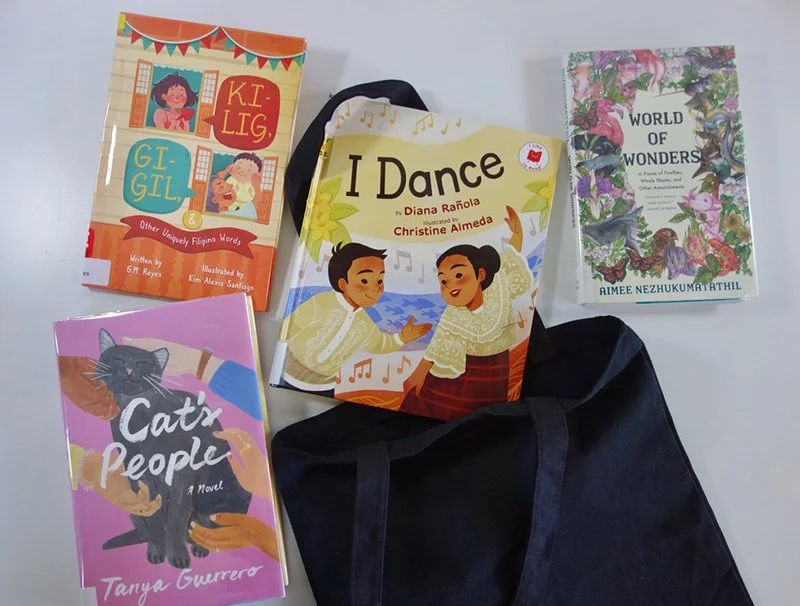
A bag of books borrowed from the library, written and illustrated by Filipinos: Kilig, Gigil, & Other Uniquely Filipino Words by G.M. Reyes, Cat’s People by Tanya Guerrero, I Dance by Diana Rañola, and World of Wonders by Aimee Nezhukumatathil. (Photo by Claire Mercado-Obias)
Getting lost in a book is one of life's simple pleasures. Start with something short: a comic book, graphic novel, children's book (you'll be surprised how much wisdom they contain), a chapter book, or a collection of essays that lets you read one chapter or essay a day. Then branch out into other genres and longer reads.
Visit your local library. It's where we found these books by Filipino American authors.
Kilig, Gigil, & Other Uniquely Filipino Words by San Francisco-based G.M. Reyes defines commonly used Tagalog words that have no exact English equivalent through rhyme and adorable illustrations.
I Dance by Connecticut-based Diana Rañola introduces Philippine folk dances and traditional costumes to early readers and anyone curious about Filipino culture.
World of Wonders by Mississippi-based poet Aimee Nezhukumatathil is a collection of essays, each centered on a natural wonder—from whale sharks to monarch butterflies. In her soulful, National Geographic-like style, she weaves together personal memories and fascinating facts. As she writes, "For it is this way with wonder: it requires that we are curious enough to look past the distractions in order to fully appreciate the world's gifts."
Cat's People, written by Manila-based Tanya Guerrero, follows five strangers experiencing loneliness and longing who are brought together by a stray cat in their Brooklyn neighborhood. It's an endearing story about community, random acts of kindness, old-school forms of communication, and the value of gathering face to face.
A Box of Handmade Hobbies
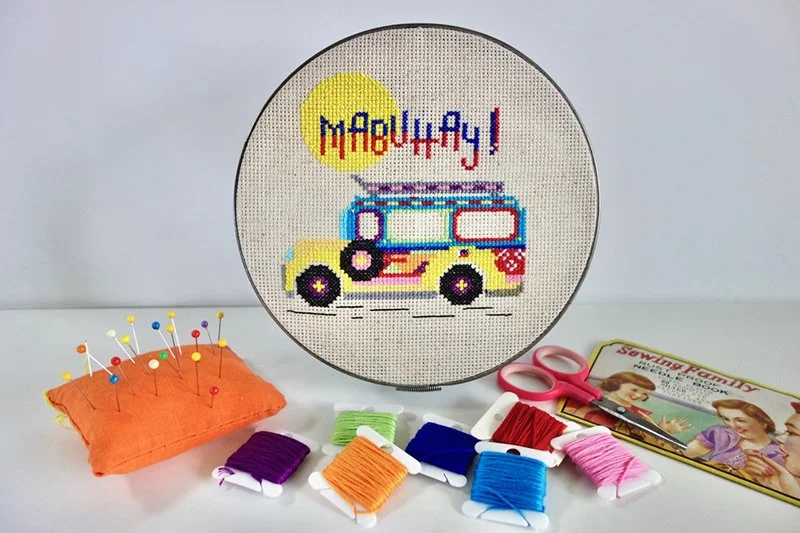
Philippine jeepney cross stitch pattern from Sugar Star Stitch on Etsy. (Photo by Claire Mercado-Obias)
Just like the older generation's habit of turning cookie tins into sewing kits, why not keep the tradition alive? Clean out an empty biscuit tin and fill it with needles, thread, scissors, and fabric. You can also add crochet hooks and yarn.
Etsy shops like Sugar Star Stitch offer cross-stitch patterns featuring the Philippine jeepney. Team Mesi Studio sells a Philippine Star crochet pattern, while Sumo Goods offers a Filipiniana Dress Doll amigurumi crochet pattern. Download, print, gather your materials, and ask your lola, mom, older sister, or cousin to teach you. Working on Filipino-inspired designs connects us to our heritage while giving us the satisfaction of creating something by hand.
Another option is a box devoted to writing. Fill it with your favorite pens, a journal, and stationery for writing letters. Improve your penmanship with ideas from Hand Lettering A to Z by Berlin-based artist Abbey Sy, or decorate your pages with Everyday Explorers Co. stamps designed by San Francisco-based Christine Herrin.
Or assemble a box of art supplies with paper, markers, paint, brushes, crayons, and coloring books. Etsy shops like Little Aphrodite Art offer Filipino-themed coloring pages that also teach children Tagalog words.
Remember that these creative activities should leave you feeling relaxed and present—not overwhelmed. They should keep you "in the zone" instead of reaching for your phone. And don't feel pressured to post your finished project on social media. It's enough that you like what you made.
Analog for Everyone
Many of these activities can be enjoyed alone, but they're even better with others.
Join a book club where members read the same book and gather to discuss it over food and drinks. Or put a twist on the idea by choosing a cookbook like Sugarcane: Sweet Recipes from My Half-Filipino Kitchen by New York-based Arlyn Osborne. She captures the nuances of the Filipino sweet tooth, pays homage to traditional ingredients like ube and calamansi, and transforms them into original desserts. Make a few recipes, then gather for a potluck.
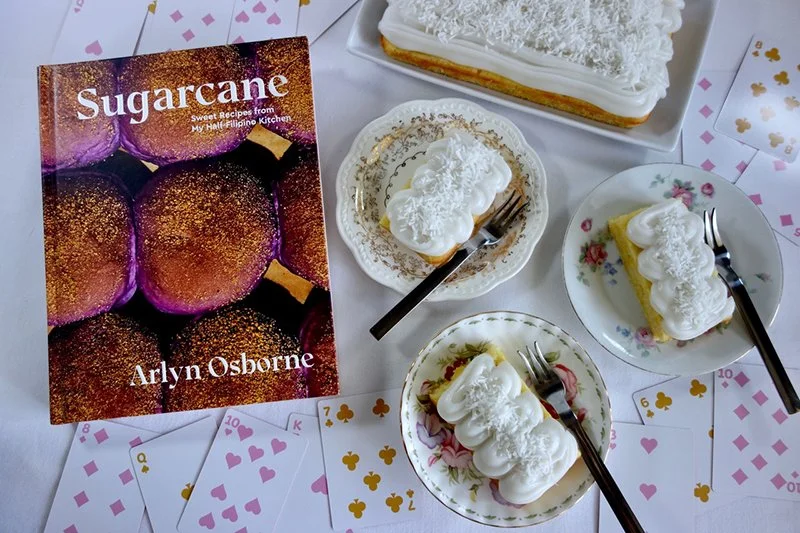
Gather with friends or strangers who share your interests such as baking from a cookbook like Sugarcane by Arlyn Osborne and playing games together. (Photo by Claire Mercado-Obias)
While we can’t go entirely digital-free, a few analog moments in our day not only boosts our mood, but it also fosters community.
Host a book swap with books you've finished and are ready to pass on to someone new. Attend a reading party or silent book club, where everyone brings their own book to read before breaking into conversation about what they're currently enjoying. Around the world, craft social clubs are also on the rise—from pottery, woodworking, sewing, and soap-making to game nights featuring mahjong or trivia. Whether you're trying a new skill or reconnecting with one you learned in your youth, these gatherings offer opportunities to play, learn, and make new friends. While we can't go entirely digital-free, carving out a few analog moments each day can boost our mood, strengthen our attention, and foster a deeper sense of community. Claire Mercado-Obias is a writer, food stylist and pastry chef based in New Jersey. More articles from Claire Mercado-Obias




No comments: