
The Architecture of Dignity: How Culture Shapes the Soul
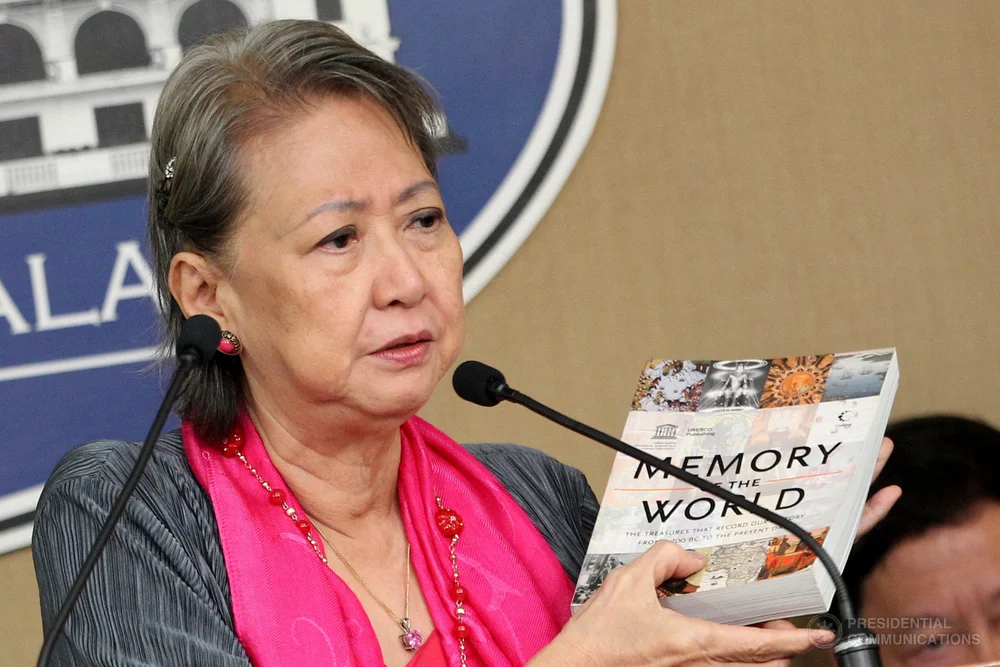
Cecile Guidote Alvarez (Photo by Ace Morandante/Wikipedia)
Today, humanity finds itself disoriented and heavy with grief. Through close-up images broadcast across our screens, we witness the senseless loss of lives and livelihoods, alongside the systematic destruction of homes, vital infrastructure, and priceless heritage sites. Yet, we must not surrender to despair. Together, we can, and we must, reinforce our collective commitment to provide hope amidst this pervasive darkness.
The truth is, we have spent years trying to engineer a sustainable future using only calculators and blueprints, while completely forgetting the very soul of the humanity we are trying to save.
Technical metrics and financial capital are undoubtedly necessary, but they are radically insufficient. The ambitious targets of the United Nations Sustainable Development Goals (SDGs) cannot be achieved by economics alone. Drawing from the vibrant, indomitable spirit of the Philippines and the wider Asia-Pacific region, we must assert a profound truth: Culture is the ultimate catalyst, the vital vehicle, and the living engine for sustainable development.
Redefining Wealth: From Deficit to Abundance
When evaluating the developing world, conventional economics suffers from a narrow vision that sees only deficit—a lack of financial capital, a shortage of infrastructure. However, if we shift our lens to culture, we discover an immense, invaluable "arsenal of talent" and a breathtaking wealth of diversity and natural resources. True development does not begin with a ledger; it begins by cultivating a "heart of compassion" to actively combat poverty and social injustice. A poignant manifestation of this philosophy can be found in the Cultural Care-giving services pioneered by the Earthsavers DREAMS National I.T.I. Center. Through this ground-breaking initiative, free artistic training—encompassing the visual arts, drama, music, and dance, integrated with modern communication technology through broadcast and cinema—is brought directly to the most marginalized sectors of society. This vital work is deliberately taken to:
• Prisoners seeking redemption
• Abused women healing from trauma
• Street children searching for safety
• Individuals recovering from substance abuse
• Persons with disabilities (PWDs)
• Indigenous youth striving to preserve their identity
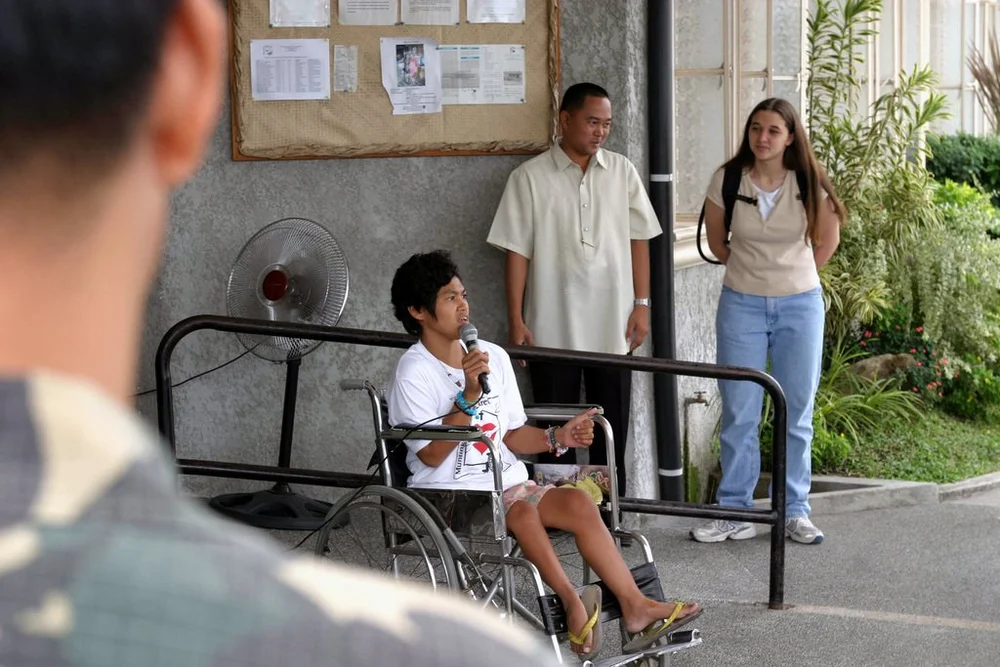
Terrilyn Aquino, a mentally disabled patient with polio, performs for visiting U.S. sailors (Source: NARA and DVIDS Public Domain Archives)
When we give a traumatized child a paintbrush, or a silenced community a stage, we are not merely offering entertainment. We are providing a platform for the voiceless, a pathway for rehabilitation, a space for trauma therapy, and a viable vehicle for socioeconomic mobility.
This daily miracle is witnessed in the Earthsavers DREAMS Ensemble, an initiative officially recognized as a UNESCO Artist for Peace. Within this ensemble, vulnerable individuals are transformed into self-actualized creators. The singers are blind; the dancers perform dynamically in wheelchairs; deaf, young, and elderly participants perform side-by-side with out-of-school acrobats. Together, they offer undeniable proof that culture is a tangible tool for restoring human dignity, breaking down bias, and dismantling deep-seated prejudice.
Translating the Abstract into the Universal
Consider the immense, overlapping challenges of our time: hunger, systemic injustice, climate degradation, health pandemics, and collapsing economies. To the ordinary citizen, the gravity of these crises is often buried under dense rhetoric, clinical data, and alienating jargon.
Culture serves as the great translator. A single painting, a poignant poem, a soaring song, or a traditional dance can bridge deep communication gaps in an instant. It possesses a unique, almost magical power to shift human consciousness from greed and indifference to caring and sharing.
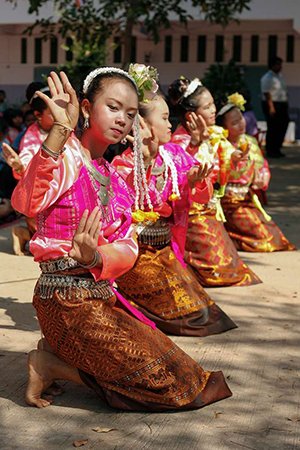
Children performing an ethnic dance (Source: NARA and DVIDS Public Domain Archives)
Furthermore, in our current era of rapid, unchecked globalization, cultural empowerment acts as a critical, protective security net. It guards against the erasing, homogenizing effects of global monoculture. By empowering local traditions, we ensure that indigenous peoples, immigrant communities, and overseas workers are not systematically excluded or forgotten, but are instead celebrated for their distinct, irreplaceable identities.
The Economy of the Soul and Intergenerational Equity
Beyond its spiritual and social utility, culture is a formidable economic driver. The creative industries—our folk arts, media, historic monuments, and eco-heritage—act as direct stimulants for local employment and social entrepreneurship, while healthily nourishing sustainable tourism.
Yet, as we build these creative economies, we must remain fiercely anchored to the principle of intergenerational equity. Our cultural heritage, our languages, and our rich biodiversity are not resources we own; they are sacred treasures borrowed from our ancestors that we must transmit intact to our children. Protecting this bio-cultural diversity is a strict moral imperative if we wish to ensure a sustainable habitat for those who follow us.
Healing the Past, Securing the Future
Where politics divides and fractures, the arts possess a unique, spiritual capacity to heal, bond, and cement broken societies. In post-colonial landscapes, cultural exchanges allow nations to meet their former colonizers not with simmering resentment, but on an equal footing of mutual respect and endogenous, self-determined development. Our cultural heritage is our collective memory. Without it, a nation is dangerously adrift—unable to learn from past mistakes and lacking the inner psychological strength required to build democratic, peaceful societies. By recognizing our shared cultural roots—the beautiful, interwoven lineages of Indo-Malayan, Polynesian, Islamic, Chinese, Christian, and Western heritages that define our Asia-Pacific family—we strengthen regional cooperation and global solidarity.
Operating under the leadership of Director General Khaled El-Enany through a proposed UNESCO global "rainbow network" of artists, teachers, communicators, athletes, climate advocates, and peace advocates, we must declare an immediate end to procrastination. The time to act is now. We must collectively realize the call for an immediate ceasefire in global conflicts and rapid decarbonization, conscientizing and motivating collective action to stop violence against both Mankind and Mother Earth.
A Call to Action
Let us boldly redefine culture for what it truly is: a basic human right and a public service métier of action. There is deep appreciation for the Azerbaijani government's vital support in initiating and developing the Global NGO Platform, a space where public authorities can dynamically collaborate with civil society and the private sector, looking far beyond mere financial balance sheets. We must explicitly recognize that cultural heritage and SDGs Techno-ResiliArts Education are not mere academic supplements; they are the very essence of human survival.
Where politics divides and fractures, the arts possess a unique, spiritual capacity to heal, bond, and cement broken societies.
Education is the key to cutting the Gordian knot of poverty, bias, and prejudice—with culture,,the arts, and indigenous heritage serving as the ultimate catalysts. Investing in culture is not a luxury reserved for affluent times; it is the fundamental pathway to resolve armed conflict through dialogue rooted in social justice and peaceful coexistence. It is the architectural framework through which we secure human dignity and safeguard a peaceful, sustainable world as we move forward—not just for today, but for the next seven generations. We pray that the future of all the children of the world will be ignited not by force, but by art. On May 14, 2026, Cecilia Guidote-Alvarez was elected Deputy Secretary-General for the Pacific region during the formal inauguration of the Global South NGO Platform, an initiative originally launched at COP29 in Baku, Azerbaijan. Cecilia Guidote-Alvarez is a trailblazer of cultural diplomacy and social transformation who has spent decades leveraging the power of the arts to heal and empower. From founding the legendary Philippine Educational Theater Association (PETA) in 1967 to making history as the youngest-ever recipient of the Ramon Magsaysay Award, her influence spans generations and borders. She is the producer-host of the long-running, award-winning Broadcast Theatre program, DZRH-Balintataw. Today, as Director of the UNESCO-designated Earthsavers DREAMS Ensemble and a globally celebrated artist-citizen, she champions the ethos of "cultural caregiving"—a visionary philosophy that seamlessly unites artistic expression with climate advocacy, trauma healing, and the uplifting of indigenous and differently-abled voices.


No comments: