
Revisiting Baler, a Blend of Heritage and Adventure
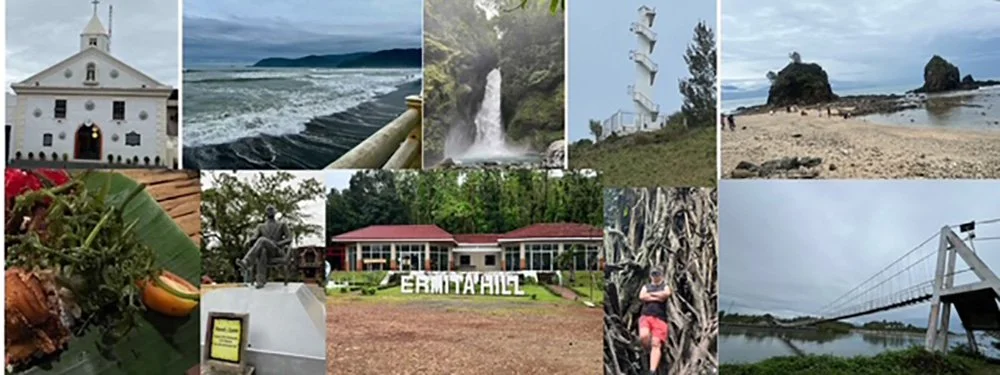
From top left, clockwise: Baler Stone Church, Sabang Beach, Mother Falls,Lighthouse, rock formations, hanging bridge, Balete tree, Ermita Hill, Quezon Monument and Museum, menu item topped with pako. (Photos by Jake Don)
As debates swirl around the film’s interpretations of Quezon’s life and legacy, many are reminded that the old Quezon province was once a single vast territory. It was eventually divided into two, giving rise to the present-day Aurora province — named in honor of Aurora Aragon Quezon, the former First Lady.
The renewed spotlight offers the perfect opportunity to revisit Baler (my first visit was in 1976), a town where the legacies of both Quezons remain deeply woven into its identity, and where history, nature, and adventure come together in spectacular harmony.
Baler’s story stretches far beyond its recent cinematic associations. Founded in 1609 by Franciscan missionaries, the town is among the oldest settlements in Luzon. It holds a prominent place in the annals of Philippine colonial history, most notably as the site of the Siege of Baler from 1898 to 1899. During this dramatic episode, a small band of Spanish soldiers barricaded themselves inside the town’s stone church for nearly a year, unaware that Spain had already lost the Philippines to the United States. The Baler Church, now a National Historical Landmark, stands as a quiet reminder of endurance and of the strange twists of history that shaped the nation.
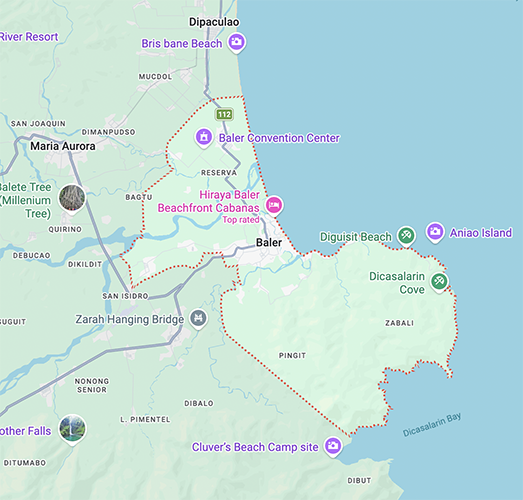
Map of Baler, Quezon (Source Goocle Maps)
Equally important to Baler’s heritage is its connection to Manuel L. Quezon. Visitors can explore the Museo de Baler and the Quezon Heritage House, both of which offer a closer look at the early life of the Commonwealth president and the history of Aurora province itself. The museum’s curated displays — ranging from photographs to period furniture and historical documents — provide a vivid narrative of the region’s evolution and the remarkable individuals who once called Baler home.

Museo De Baler (Source: Wikipedia)

The Quezon Heritage House (Source: Wikipedia)
Yet it is not only history that defines this coastal gem. Baler is celebrated nationwide as a cradle of Philippine surfing. Facing the vast Pacific Ocean, Sabang Beach draws surfers of all skill levels. Its steady, manageable waves make it ideal for beginners, while the energetic surf culture — born in part after the filming of Apocalypse Now in the 1970s — continues to thrive in its beachfront cafés, surf schools, and laid-back accommodations.
For nature seekers, Baler and its surrounding towns offer unforgettable outdoor experiences. A short drive to San Luis leads travelers to the trail to Ditumabo (Mother) Falls, a 140-foot cascade hidden deep within the rainforest. It is not for the faint of heart — literally — as it involves a 1.3-kilometer trek through river crossings and narrow, slippery footpaths. But it is a refreshing immersion into the lush landscapes that characterize the Sierra Madre range.
Equally captivating is Dicasalarin Cove, a secluded white-sand beach framed by rugged cliffs and emerald waters. Vehicular road access has been closed to the public, but the cove can be reached by banca. The nearby Baler Lighthouse perched atop a high hill, along with Ermira Hill, rewards visitors with sweeping views of the Pacific coastline.
Baler’s natural wonders extend to its famed trees. The Millennium Tree of Maria Aurora — a giant balete believed to be over six centuries old — is so massive that visitors can step inside its tangled roots. Meanwhile, the Old Baler Hanging Bridge offers charming views of the Tibag-Sabang River and the verdant countryside.
Even amid its rising popularity, Baler has managed to preserve its authenticity and small-town feel with a blend of heritage, natural beauty, and adventure.
Local cuisine further enriches the Baler experience. Fresh seafood, coconut-infused dishes, and delicacies such as suman (leaf-wrapped sticky rice or cassava cake) and bagoong (fermented shrimp or fish) reflect both coastal living and deep-rooted culinary tradition. Simple eateries and town markets add to the warm, unhurried character that defines daily life in Aurora. Worth noting and experiencing is Kusina Luntian by Sabang Beach, open only on weekends, where utensils are not an option and each item on the menu comes with a topping of fresh pako (young fern) salad, red egg, and tomato, served on a banana leaf.
Baler has progressed much since my first visit. It is more populated now, and signs of commercialization stare at you as you walk or drive past Jollibee, Mang Inasal, and Chowking.
Even amid its rising popularity, Baler has managed to preserve its authenticity and small-town feel with a blend of heritage, natural beauty, and adventure. Amplified by renewed interest in the Quezon story, Baler beckons not just as a destination, but as a meaningful journey into the past and present of a remarkable province.

Rene Astudillo is a writer, book author and blogger and has recently retired from more than two decades of nonprofit community work in the Bay Area. He spends his time between California and the Philippines.


No comments: